
Building Rehabilitation: Dos and Don’ts | Zindus – Rehabilitation Expert
Rehabilitating a building is a critical process that ensures safety, longevity, and functionality. Whether you’re dealing with an old heritage structure or a modern building that’s showing signs of wear and tear, certain best practices can make all the difference. In this blog, we’ll dive into the essential dos and don’ts of building rehabilitation, helping you navigate the process effectively.
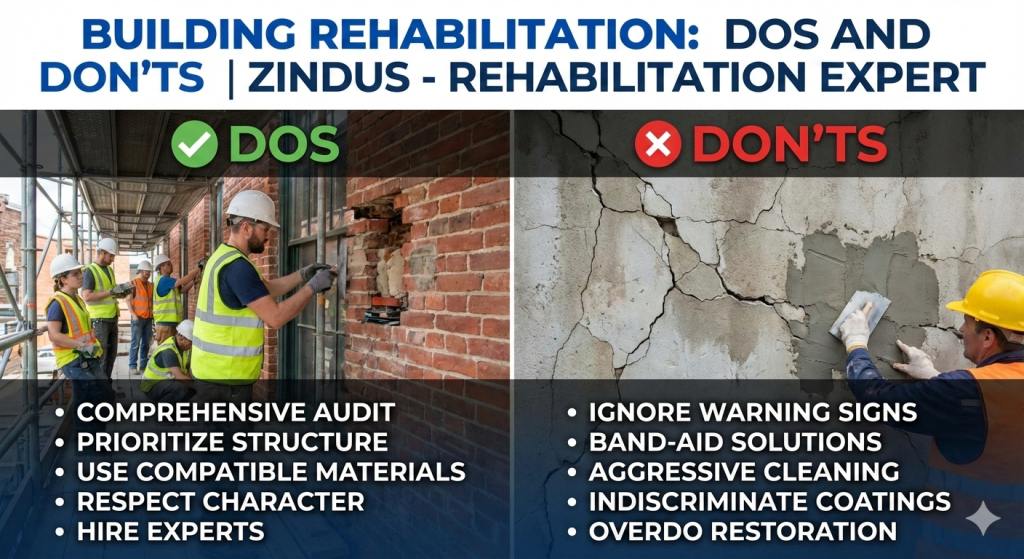
The Dos of Building Rehabilitation
- Conduct a Thorough Inspection:
Before starting any rehabilitation work, it’s vital to perform a detailed inspection. Engage structural engineers and experts to assess the building’s condition, identify weaknesses, and pinpoint areas that need attention. - Prioritize Structural Integrity:
Focus on reinforcing the building’s structural elements like foundations, beams, columns, and load-bearing walls. Ensuring these core components are solid will extend the building’s lifespan. - Use Quality Materials:
Always choose high-quality, durable materials that match the original construction standards. This helps maintain the building’s authenticity and ensures long-term durability. - Comply with Local Regulations:
Adhere to local building codes, zoning laws, and safety standards. This ensures that your rehabilitation efforts are legally compliant and safe. - Preserve Historical Elements:
If the building is of historical significance, strive to preserve its unique architectural features. This not only maintains the building’s character but also enhances its value.
The Don’ts of Building Rehabilitation
- Avoid Cutting Corners:
Never compromise on quality or safety to save costs. Shortcuts can lead to future structural problems and increased expenses down the line. - Don’t Overlook Modern Technology:
Incorporate modern technology and techniques where appropriate. This could include advanced materials, energy-efficient systems, or modern safety equipment. - Avoid Ignoring the Environment:
Be mindful of the environmental impact of your rehabilitation. Use sustainable practices, minimize waste, and consider eco-friendly alternatives. - Don’t Neglect Maintenance:
Rehabilitation isn’t a one-time task. Regular maintenance is key to preserving the building’s condition. Schedule periodic inspections and upkeep. - Avoid Lack of Communication:
Maintain open communication with all stakeholders, including architects, engineers, and contractors. Clear collaboration ensures a smooth and successful rehabilitation process.
Frequently Asked Questions (FAQ)
Q1: How long does building rehabilitation typically take?
A1: The duration depends on the building’s condition, the scope of work, and the complexity of the project. It can range from a few weeks for minor repairs to several months for extensive rehabilitation.
Q2: Is it possible to live in a building during rehabilitation?
A2: In some cases, minor repairs can be done while the building is occupied. However, for major rehabilitation, it’s usually safer and more convenient to temporarily relocate occupants.
Q3: How much does building rehabilitation cost?
A3: Costs vary widely depending on the extent of the work, materials used, and labour involved. It’s important to get a detailed quote and plan to budget effectively.
Q4: What are the common challenges in building rehabilitation?
A4: Common challenges include unforeseen structural issues, budget overruns, delays due to weather or supply chain problems, and ensuring compliance with updated building codes.
Conclusion
Building rehabilitation is a complex yet rewarding endeavour. By following these dos and don’ts, you can ensure a successful project that stands the test of time. For expert guidance and more insights, trust Zindus as your rehabilitation partner.

Great article on building rehabilitation! The dos and don’ts are practical and easy to follow — especially the emphasis on proper structural assessment and using trusted materials. Regular inspection and planning repair work right can save major costs and hassles later. Thanks for the useful tips!”
https://smca64.com/